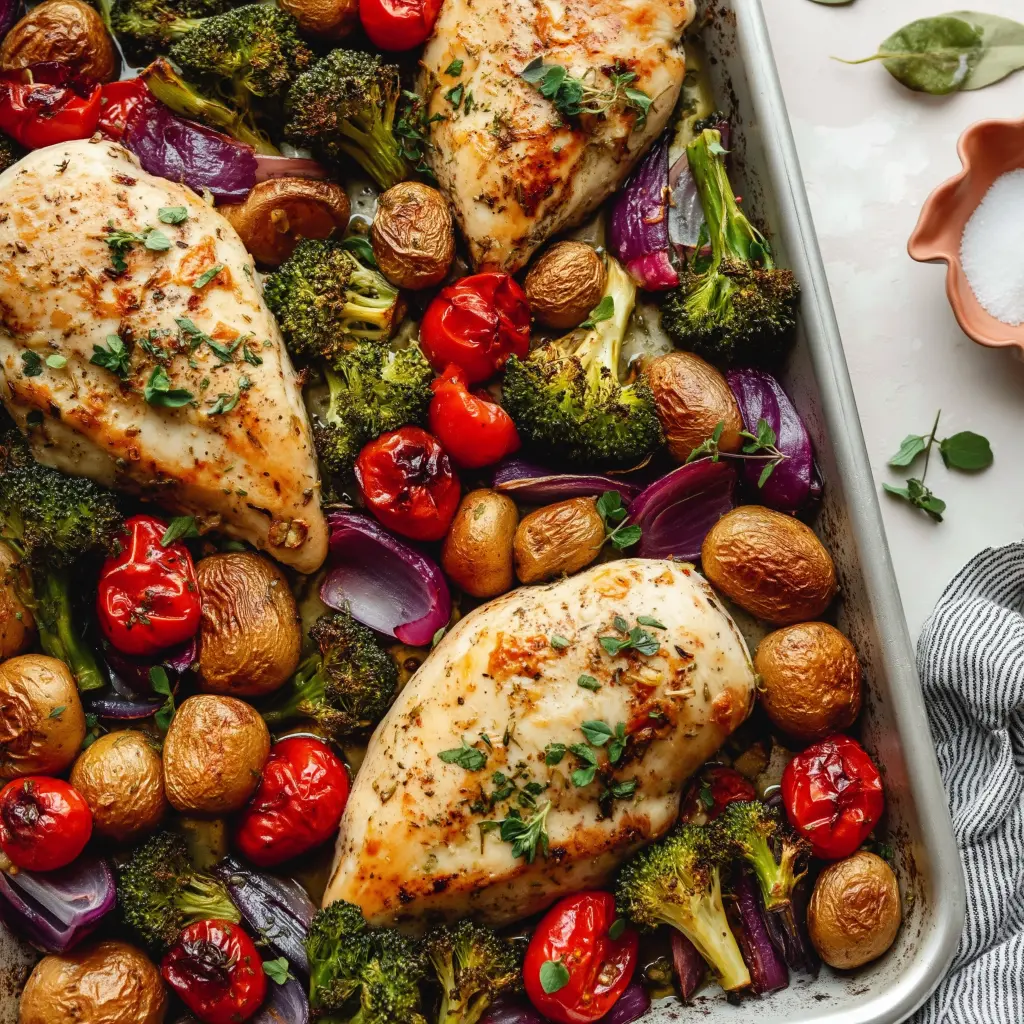
Greek sheet-pan chicken is the kind of dinner that feels generous without creating extra work. Everything roasts together on one pan, the vegetables soften and pick up color around the edges, and the chicken turns juicy under a garlicky lemon-oregano dressing. Then come the finishing touches: briny olives, chunks of feta, and chopped parsley. The whole pan looks full and lively, which makes it a strong choice for a family dinner or a meal when you want something a little fresh but still substantial.
One of the nicest parts of this recipe is how the dressing does so much of the heavy lifting. The ladolemono brings lemon juice, dried oregano, garlic, olive oil, salt, and black pepper into one bold mixture that works as both marinade and pan sauce. As the chicken and vegetables roast, those flavors mix with the juices on the tray, creating a spoonable finishing sauce that gives the whole meal its Greek-inspired character.
This dinner also fits real-life cooking. The prep is short, the ingredient list feels familiar, and you do not need a second pan for the vegetables or a separate sauce pot on the stove. The oven does most of the work, and the final result feels like more than the effort it took to get there.
Ingredients

The chicken side of this recipe starts with boneless skinless chicken thighs, which are a good fit for sheet-pan cooking because they stay tender as the vegetables roast around them. The vegetables include red onion, zucchini, orange bell pepper, and tomato. That mix brings sweetness, tenderness, and enough moisture to keep the tray from feeling dry.
The olives and feta matter here too. Pitted Kalamata olives bring a deeper salty flavor, while Castelvetrano olives add a milder buttery note. The feta softens slightly in the oven and gives the finished pan little creamy pockets throughout. Chopped Italian parsley at the end freshens the whole dish and brightens the richer flavors from the olive oil and chicken juices.
For the ladolemono, fresh lemon juice, dried oregano, minced garlic, kosher salt, black pepper, and extra virgin olive oil come together into a dressing that tastes vivid and savory at the same time. It is the thread that ties every part of the tray together.
Sheet Pan Chicken Ingredients
The recipe works because the ingredients bring contrast. Lemon keeps the dish lively. Oregano and garlic build the savory base. Olive oil gives the tray body and helps everything roast rather than dry out. The vegetables cook in that dressing from the beginning, so even the onion and zucchini pick up a lot of character.
Chicken thighs are especially forgiving for this style of dinner. They roast well at a high oven temperature and still stay tender, which is useful when the pan also holds vegetables and cheese. The olives and feta are not just toppings tossed in at the end for looks. They are part of the flavor story, bringing salt, richness, and that classic Greek profile the dish promises.
This is also one of those recipes where ingredient quality is easy to taste. Fresh lemon juice is worth using because it gives the ladolemono its clean brightness. A good olive oil helps too, since the dressing is such a big part of the finished pan juices.
How to Make Greek Sheet-Pan Chicken
Start by heating the oven to 425°F. While the oven heats, whisk together the lemon juice, dried oregano, minced garlic, kosher salt, black pepper, and extra virgin olive oil. This dressing is the flavor base for the whole meal, so it is worth whisking until it looks fully blended.
Spread the sliced red onion, zucchini, orange bell pepper, and tomato wedges on a sheet pan. Season them well, then toss them with about 1/4 cup of the dressing. That first layer of dressing helps the vegetables roast with flavor from the start instead of waiting for the chicken juices to do all the work.
Season the chicken thighs and place them on the pan with the vegetables. Add the Kalamata olives, Castelvetrano olives, and chunks of feta. Drizzle the remaining dressing over everything. At this point the pan may look quite full, but that is part of its appeal. As it roasts, the vegetables soften and settle, and the feta warms into the pan without disappearing completely.
Bake until the chicken is cooked through, about 35 minutes. If you like a bit more color, broil briefly at the end. Once the pan comes out, spoon the juices over the chicken and vegetables, then finish with chopped parsley. Those juices matter. They carry the lemon, garlic, olive oil, and chicken drippings into every serving and keep the pan from tasting flat.
The recipe card notes that the chicken is done when the center is no longer pink or it reaches 165°F. That check is especially helpful with sheet-pan dinners, where piece size can vary.
Swaps, Subs, and Tips
The notes mention that seasonal vegetables can be swapped in as needed, which gives this dinner a lot of flexibility. The heart of the recipe is really the chicken, the ladolemono, the olives, and the feta. As long as the vegetables you choose roast well on a sheet pan, the dish can still feel very much like itself.
Another useful tip is not to skimp on seasoning the vegetables before they go into the oven. Because they are sharing space with boldly flavored chicken, feta, and olives, they need a little help to hold their own. The dressing does much of that work, but a good hit of salt and pepper on the tray matters too.
When the dinner is done, spooning the juices over the chicken is more than a finishing step. It pulls the dish together and gives each serving more of the lemony olive-oil flavor that defines the recipe. Those juices are part sauce, part dressing, and part roasting liquid, and they are where a lot of the character ends up.
What to Serve with Greek Sheet Pan Chicken
This sheet-pan chicken can stand on its own, but it also pairs well with foods that can catch some of the pan juices. Rice, warm flatbread, or a simple grain bowl are all comfortable options. A crisp salad on the side also works nicely because the chicken and feta bring plenty of richness already.
Because the tray has protein, vegetables, cheese, and olives all in one place, you do not need much else to make dinner feel complete. That balance is one of the recipe’s strengths. It saves effort but still gives you a full plate.
Leftovers and next-day serving
The leftovers hold up nicely because chicken thighs tend to stay tender. When reheating, spoon any extra pan juices back over the chicken so the flavors stay connected. A little parsley added after warming can freshen it up again without changing the character of the dish.